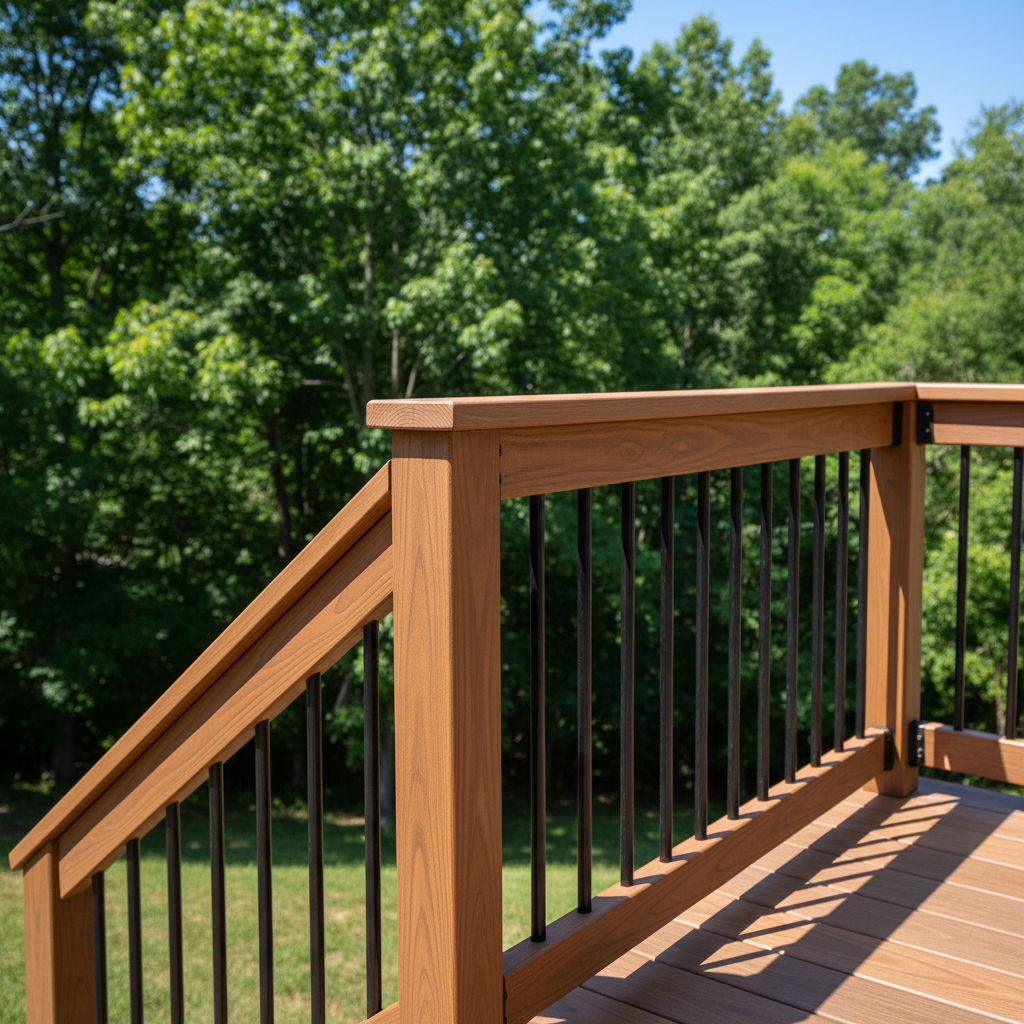
What are the main types of deck railing materials you install?
You’ve got a few solid options when it comes to deck railings, and each has its own vibe and maintenance needs. Here in Morganton, I mostly work with three main types: pressure-treated wood, composite, and aluminum. Wood is classic, right? It’s usually the most budget-friendly upfront, and you can stain or paint it to match your house. But, you’ll need to keep up with that maintenance – sealing, staining, checking for rot, especially with all the humidity we get in the summer. Composite railings, often made by companies like Trex, are super popular because they’re low maintenance. They won’t rot, splinter, or need painting, and they come in a bunch of colors. They cost more initially, but you save on upkeep down the road. Then there’s aluminum. This is a sleek, modern look. It’s incredibly durable, rust-resistant, and basically maintenance-free beyond a quick wash now and then. It’s usually the most expensive option, but it lasts forever and offers great sightlines, especially with thinner pickets.
Do I need to worry about local building codes for deck railings in Morganton?
Absolutely, you do. This isn't something you can just wing. The North Carolina Building Code, which Morganton follows, has specific requirements for deck railings that are there to keep everyone safe. The big one is height: residential deck railings generally need to be at least 36 inches high from the deck surface. If your deck is more than 30 inches off the ground, you need a railing. Then there’s the ‘4-inch sphere rule’ – that means no opening in your railing can be large enough for a 4-inch sphere (think a small child’s head) to pass through. This applies to the space between pickets, under the bottom rail, and any decorative cutouts. Handrails also have specific grip size requirements and must be continuous. I’ve seen folks in older neighborhoods, like over near the Catawba River, sometimes have decks that were built before current codes. When it’s time to replace those railings, they always have to be brought up to today’s standards. It’s a non-negotiable safety thing, and Paradise Deck Solutions always makes sure we’re up to code.
How much does deck railing installation typically cost?
That’s the million-dollar question, and honestly, it varies a lot. It’s not a one-size-fits-all answer. The biggest factors are the material you choose, the linear footage of railing you need, and the complexity of the design. As I mentioned, wood is generally the least expensive, followed by composite, and then aluminum or specialized systems like glass or cable railings are at the top end. Installation costs also depend on whether we’re just replacing old railings or building new ones on a brand-new deck. If there’s a lot of demolition involved, or if the deck structure needs reinforcement to support heavier railings, that adds to the labor. A good rule of thumb is to budget anywhere from $50 to $150+ per linear foot, installed, but that’s a very broad range. The best way to get an accurate number is to have me come out, take a look, and give you a detailed quote based on your specific project.
Can I mix and match different railing materials?
You sure can, and it’s a great way to get a custom look or balance costs. I’ve done plenty of decks where we’ve used, say, composite posts and top rails, but then filled in with aluminum pickets. That gives you the low-maintenance benefits of composite for the main structure, but the sleek, open feel of aluminum for the infill, often at a lower price point than full aluminum. Another popular option is a wood frame with cable railing infill. That’s a really modern look that offers fantastic views, especially if you’ve got a nice backyard or a view of the mountains. Just make sure whatever combination you choose still meets those building code requirements for spacing and strength. We can talk through different combinations and what would work best for your deck's style and your budget.
How long does it take to install new deck railings?
For an average-sized deck, say 200-300 square feet, installing new railings usually takes anywhere from one to three days. It really depends on the material and the complexity. Wood railings might take a bit longer if there’s a lot of cutting, fitting, and finishing involved. Composite and aluminum systems, while sometimes more complex in their initial assembly, can often go up quicker once the system is understood, as they’re often pre-fabricated to some extent. If we’re just replacing existing railings on an otherwise sound deck, it’s usually on the shorter end. If it’s part of a larger deck build, it’s integrated into that timeline. Weather can also play a role; nobody wants to be installing railings in a downpour. We’ll always give you a clear timeline once we scope out your project.
What kind of maintenance will my new railings need?
This goes back to your material choice. If you go with pressure-treated wood, you’re looking at regular cleaning, and then sealing or staining every couple of years to protect it from our Morganton weather. That means preventing rot, mildew, and UV damage. Composite railings are super low maintenance. A simple wash with soap and water a couple of times a year is usually all they need to look great. You might want to scrub off any mildew if it builds up in shady spots. Aluminum railings are even easier – just a rinse with the hose or a wipe down with a damp cloth to remove dirt. They won’t rust, rot, or need painting. So, if you’re someone who hates weekend chores, composite or aluminum will be your best friends.
What are some design considerations beyond just material?
Beyond the material, you've got a lot of choices that impact the look and feel of your deck. Think about the style of your home – do you want something traditional, modern, rustic? Picket style is a big one: traditional vertical pickets, horizontal cables for a contemporary vibe, or even glass panels for an unobstructed view. Top rail design also matters; a flat, wide top rail can serve as a place to set drinks, while a narrower, rounded one might be purely for gripping. Lighting is another fantastic addition. Post cap lights, under-rail strip lighting, or even integrated LED lighting in the posts can totally transform your deck at night, making it safer and more inviting. Don't forget gates if you need to secure an area for kids or pets. We can walk through all these options to make sure your new railings aren't just safe and functional, but also really enhance your outdoor living space.