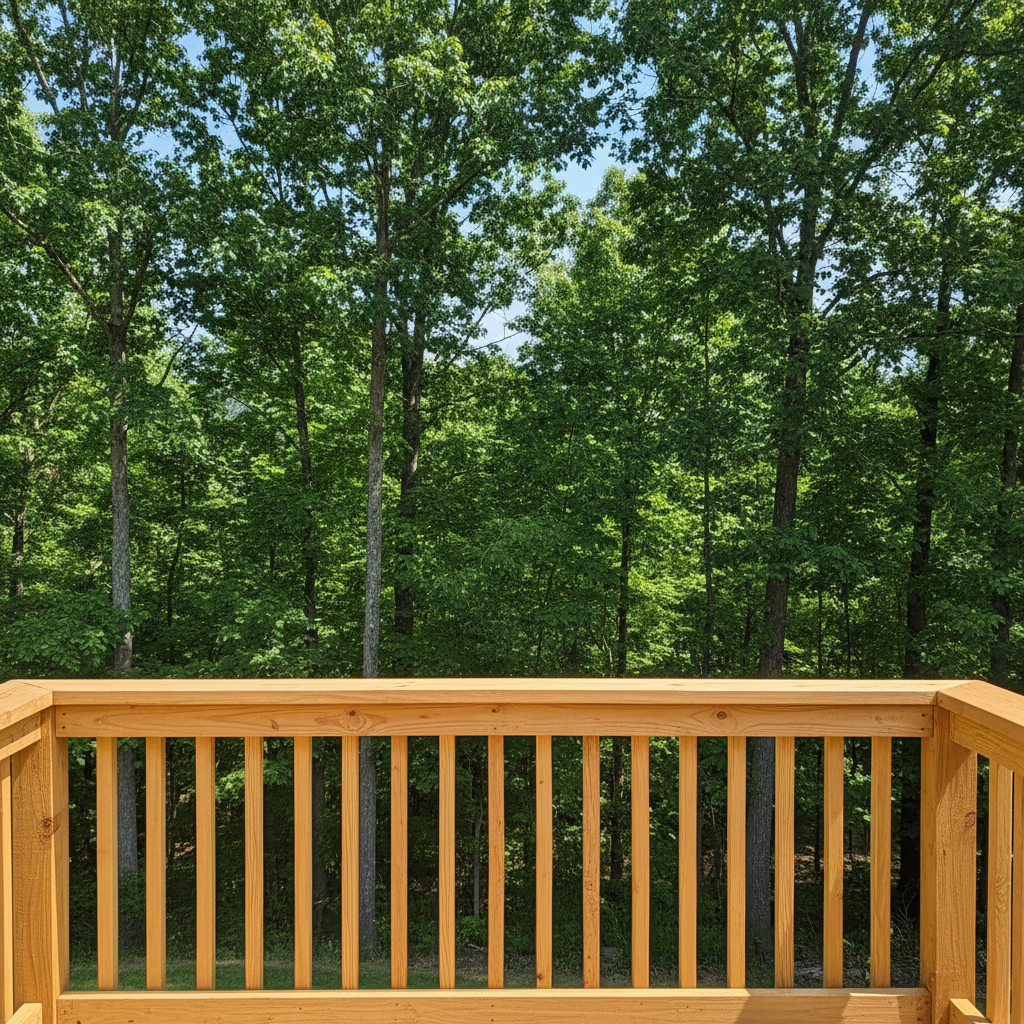
So, you've got a great deck, maybe we even built it for you at Paradise Deck Solutions. That railing? It's not just there to look pretty. It's keeping your kids, your grandkids, and your tipsy uncle from taking a tumble. You want that thing to last, right? Of course you do. Here's how to make sure your deck railings stay sturdy and safe for years to come.
Extending the Life of Your Railings
The biggest thing you can do to extend the life of your railings, no matter what material they're made of, is to protect them from the elements. Here in Morganton, we get a good mix of everything – hot, humid summers, freezing winters, and sometimes those wild swings where it's 70 degrees one day and snowing the next. That kind of weather is tough on outdoor structures.
If you've got wood railings, a good quality stain or sealant is your best friend. I'm not talking about the cheap stuff you put on once and forget. You need something that penetrates the wood and protects against UV rays, moisture, and rot. You'll want to reapply it every 2-3 years, sometimes more often if your deck gets direct sun all day or is under a lot of trees that shed debris. For composite or PVC railings, they're pretty low maintenance, but a good cleaning goes a long way. Metal railings, especially aluminum or powder-coated steel, usually hold up great. Just make sure the finish isn't scratched, because that's where corrosion can start.
Regular Maintenance: What You Should Be Doing
You don't need to be out there with a magnifying glass every day, but a little routine inspection and cleaning can save you a lot of headaches and money down the line. I tell folks to do a quick check-up twice a year, maybe in the spring after the last frost and again in the fall before the real cold sets in.
- Clean 'Em Up: For wood, composite, or PVC, a simple wash with mild soap and water, maybe a soft brush, will remove dirt, pollen, and mildew. Mildew loves our humid summers, especially in shadier spots like under a big oak tree in the Catawba River Greenway area. Rinse thoroughly. For metal, just wipe them down.
- Check Fasteners: Go around and gently wiggle each post and baluster. Are they tight? Are any screws loose or popping out? Tighten anything that's wobbly. If a screw is stripped, you might need to replace it with a slightly larger one or fill the hole with wood filler before re-drilling.
- Inspect for Damage: Look for cracks, splinters, rot (on wood), rust (on metal), or fading/chalking (on composite/PVC). Pay close attention to where the railings meet the deck surface, as that's often where water can sit and cause issues.
- Clear Debris: Make sure water can drain freely. Leaves and pine needles can pile up in corners or at the base of posts, trapping moisture.
Warning Signs of Problems
Don't ignore these. They're telling you something's wrong and needs attention:
- Wobbling Posts or Railings: This is a big one. If a post or a section of railing moves more than an inch or two when you push on it, that's a safety hazard. It means the connection to the deck or the post itself is compromised.
- Rot or Soft Spots in Wood: Poke at the wood with a screwdriver, especially near the ground or where it connects to other pieces. If it feels soft or crumbles, you've got rot.
- Excessive Rust or Corrosion: A little surface rust on a screw head might be okay, but if you see significant rust on metal components, especially at joints, it's weakening the structure.
- Cracks or Splitting: Large cracks in wood, or any significant cracking in composite or PVC, can indicate structural issues or material failure.
- Loose Balusters: If the vertical pickets are falling out or easily removed, the railing isn't doing its job of preventing falls.
When to Call a Professional
Look, I'm all for DIY, but some things are best left to the pros. If you see any of those serious warning signs – significant wobbling, widespread rot, or major structural damage – it's time to call someone like us. Don't try to jury-rig a fix for a safety issue. We've got the experience and the right tools to properly assess the damage, make the necessary repairs, or even replace sections that are beyond saving. Sometimes, what looks like a small problem can be a symptom of a bigger issue underneath. It's better to get a professional opinion and fix it right the first time than to risk an accident later.