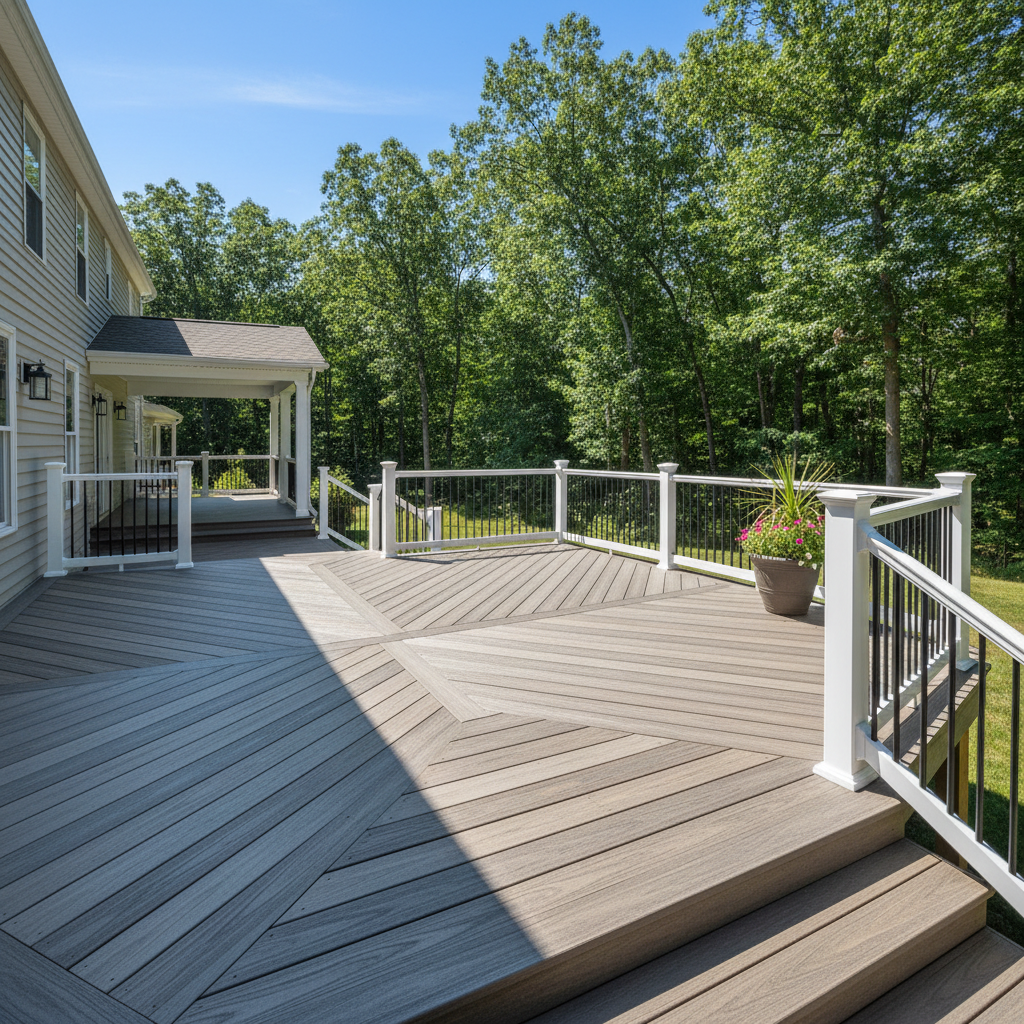
You invested in a Trex deck for a reason, right? You wanted something low-maintenance, durable, and good-looking. And you got it! But 'low-maintenance' doesn't mean 'no maintenance.' Especially here in Morganton, with our humid summers and sometimes icy winters, you've got to give your composite deck a little love to make sure it lasts as long as it should.
Extending Your Trex Deck's Life: It's Easier Than You Think
The biggest thing you can do to extend the life of your Trex deck is pretty simple: keep it clean. Seriously, that's 90% of it. Dirt, pollen, leaves, and even just general grime can sit on the surface, and over time, that stuff can lead to mold and mildew. And while Trex is resistant, it's not invincible. You want to prevent that buildup.
Another big one, especially if you've got a deck that gets a lot of direct sun, is to be mindful of heavy furniture or planters. If you're going to put something heavy down, use a mat or put little risers under it to allow air circulation. This helps prevent moisture from getting trapped underneath and causing discoloration. It's not a huge deal, but it's a smart habit.
Here in Burke County, we see all kinds of weather. One year it's a mild winter, the next we're dealing with ice storms that bring down trees. If you're shoveling snow off your deck, use a plastic shovel, not metal. A metal shovel can scratch the surface, and that's just a headache you don't need.
Regular Maintenance: What You Need to Do
Alright, so what does regular maintenance actually look like? It's not complicated, I promise.
- Sweep it off: Do this regularly, maybe once a week or every couple of weeks, especially during pollen season or when leaves are falling. Get rid of all the loose debris.
- Wash it down: A good wash with soap and water is your best friend. I recommend a soft-bristle brush and a bucket of warm, soapy water. Dish soap works fine, or you can get a cleaner specifically designed for composite decks. Scrub gently in the direction of the grain.
- Rinse thoroughly: After scrubbing, rinse the whole deck with a garden hose. Make sure you get all the soap residue off. Don't use a pressure washer unless you know exactly what you're doing and use a very low setting (under 1500 PSI) and a fan tip. Too much pressure can damage the surface.
- Deal with spills immediately: If you spill food, drinks, or anything else, clean it up right away. The longer it sits, the harder it is to get out.
For us here in Morganton, I'd say a good deep clean like this should happen at least twice a year. Once in the spring to get rid of all the winter grime and pollen, and then again in the fall before the leaves really start coming down. If your deck is under a lot of trees, or if you live in a shadier spot like some of the older neighborhoods around the Catawba River, you might need to do it more often to combat mildew.
Warning Signs of Problems
Even with the best care, sometimes things pop up. Here's what to look out for:
- Persistent Stains: If you've got a stain that just won't come out with regular cleaning, that's a sign. It could be from something left on the deck too long, or maybe a stubborn mold spot.
- Fading or Discoloration: While Trex is designed to resist fading, extreme sun exposure over many years can still cause some subtle changes. Uneven fading, or areas that look significantly different from others, might be a concern.
- Mold or Mildew: You'll see this as black or green spots. It's common in our humid climate, especially on decks that don't get much sun. If it's spreading quickly or coming back right after you clean it, something's up.
- Loose Boards or Railings: This is a safety issue. If a board feels wobbly or a railing post seems loose, don't ignore it.
- Scratches or Gouges: While Trex is tough, it's not scratch-proof. Deep scratches can sometimes hold dirt and become more noticeable.
When to Call a Professional
Look, I'm a big believer in DIY when it makes sense, but there are times you just need to call in the pros. If you're seeing any of those warning signs, especially persistent mold or structural issues, it's time to get a professional opinion. Trying to fix some of these things yourself can sometimes make them worse, or you might miss the underlying problem.
For example, if you've got a widespread mold issue that keeps coming back, there might be a drainage problem or something else contributing to it that a professional can identify. Or if you've got a loose board, it could be more than just a screw; it might indicate a subframe issue. We've seen it all at Paradise Deck Solutions, and we can quickly assess the situation and recommend the right fix.
Don't wait until a small problem becomes a big, expensive one. A quick inspection can save you a lot of hassle and ensure your Trex deck continues to be a beautiful, safe extension of your home for years to come.